


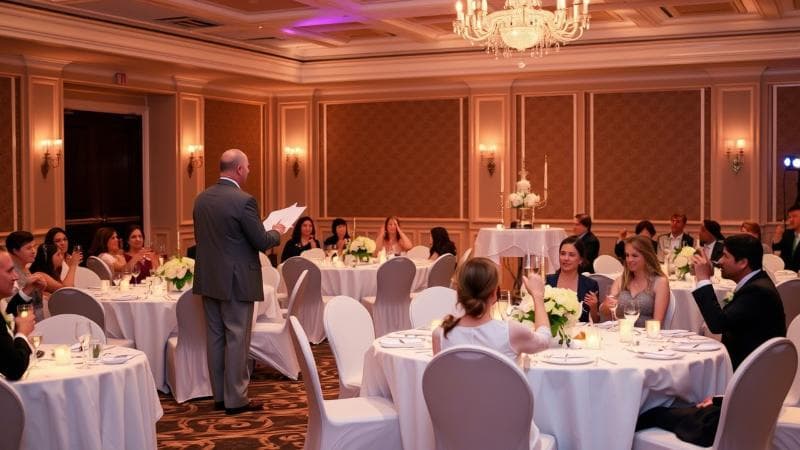
Why Choose Our Wedding Toast Generator
Perfect Length
Generate concise, elegant toasts (30-90 seconds) that capture the perfect sentiment without dragging on, ideal for raising glasses and creating memorable moments.
Versatile Usage
Our toasts work for any wedding role or situation, whether concluding a speech, responding to an unexpected request to speak, or creating transitional moments.
Elegant Phrasing
Craft toasts with elevated, memorable language that feels special for the occasion while remaining authentic to your voice and relationship with the couple.
Hear From Others Who Created Wedding Toasts
"I was unexpectedly asked to give a toast at my cousin's wedding with only an hour's notice. WedSpeech.ai helped me create a perfect 60-second toast that was heartfelt but not overwhelming for someone who wasn't prepared to speak."
David C.
The Ultimate Wedding Toast Guide
What a Wedding Toast Is For
A wedding toast is the shortest speech of the day and often the one people remember. Your job is small and specific: hold the room for under a minute, say one true thing about the couple, and give everyone a reason to raise a glass together.
Because a toast is brief, every line has to earn its place. You don't need an opening joke, a story, or a thank-you list. You need one sentiment, slightly elevated language, a clear cue for the room, and the couple's names to finish. Nail those four and you have a toast.
A Simple Wedding Toast Outline
Most good wedding toasts follow the same five-part shape. Fill each part with your own details and you already have a toast.
- Opening: name yourself if needed, or jump straight in (about 5 seconds).
- One sentiment: the single thought you want to leave them with (about 20 seconds).
- A forward wish: something about their future together (about 15 seconds).
- The cue: "Please join me in raising a glass" (about 5 seconds).
- The names: "To Sarah and James!" and a sip (about 5 seconds).
Essential Elements of a Great Wedding Toast
- Confirm the moment and your time limit: Know whether you're closing out a longer speech or standing alone, and how long you have. Most toasts run 30 to 90 seconds. If you're following your own speech, the toast is just the ending, so don't restate it.
- Name yourself if the room needs it: If you haven't been introduced, one line like "For those who don't know me, I'm Sarah, the bride's cousin" is enough. Skip it entirely if everyone knows who you are.
- Choose one sentiment, not three: Pick the single thought you actually want to leave them with. One true observation about the couple beats a list of compliments. A toast is a spotlight, not a summary.
- Lift the language slightly: A toast is ceremonial, so a touch more formality than everyday talk works. You don't need poetry, just one or two lines that sound like they were worth saying out loud.
- Look ahead, not back: Close with a wish for the future: the home they'll build, the years ahead, the way they'll show up for each other. A toast that looks forward lands better than one that rehashes the past.
- Invite the room to raise their glasses: One clear cue like "Please join me in raising a glass." It tells guests what to do and gives your toast its shape. Then pause for a beat so the glasses actually go up.
- End with the names: Finish on "To Sarah and James!" and take a small sip. That's the whole toast. Don't add another sentence after the names; the names are the period.
Tips for Delivering a Memorable Wedding Toast
- Write the closing line first. Once you know how it ends, everything else points at it.
- Memorize it. A toast is short enough to learn, and eye contact beats reading off a phone.
- Hold your glass at chest height, not overhead. It keeps you steady and looks composed.
- Speak a touch slower than your normal pace. Nerves speed you up without you noticing.
- Look at the couple, not the whole room. It narrows the moment and steadies your nerves.
- Pause after "raise a glass." Let the room actually lift their glasses before you go on.
- Take one small sip at the end, not a drink. The toast is yours; the celebration is after.
- If you tear up, pause and smile. Nobody minds, and half the room is already emotional.
Common Wedding Toast Mistakes to Avoid
- Turning a toast into a speech. If you hit the two-minute mark, you've lost the room.
- Cramming in three different wishes. One clear sentiment beats a list.
- Reading from your phone. A phone screen glares under reception lights and breaks eye contact.
- Restating your whole speech. If the toast follows your speech, don't summarize it again.
- Ending without the names. "To the bride and groom" is the whole point; don't forget it.
- A joke that could land wrong. If the couple's grandmothers wouldn't laugh, cut it.
- Drinking too much before you speak. Champagne plus nerves plus an empty stomach is a bad trio.
- Rushing the "raise a glass" cue. Say it, pause, let glasses go up, then finish.
Frequently Asked Questions
What's the difference between a wedding toast and a wedding speech?
A toast is short, usually 30 to 90 seconds, and centers on one wish for the couple. A speech is longer and can carry stories, thanks, and several ideas. A toast often closes out a speech, but it can also stand alone.
How long should a wedding toast be?
Aim for 30 to 90 seconds. That's long enough for one real sentiment and a raise of the glass. If you're nervous, 30 seconds done well beats two minutes of rambling.
What should I say in a wedding toast?
One clear wish or observation about the couple, a line of slightly elevated language, an invitation to raise glasses, and their names to close. You don't need a story or a full introduction unless the room doesn't know you.
How do I give a toast if I'm nervous?
Memorize it, since it's short. Hold your glass at chest height, look at the couple, and speak a little slower than normal. A deep breath and a smile before you start settle the room and you.
What are some classic wedding toast phrases?
Open with "Please join me in raising a glass" or "I'd like to propose a toast." Close with "To the bride and groom!" or the couple's names. Between them, one sincere wish like "May your home be full of laughter."
When should a toast happen at a wedding?
Most formal toasts land during the reception meal, usually after the best man and father of the bride have spoken. Beyond the schedule, brief toasts also fit after the first dance or before the cake.
Can a toast stand alone without a speech?
Yes. A guest or family member can offer a short toast on its own without a full speech. It works best when it's one focused wish, delivered in under a minute, and closes on the couple's names.
Should I use a joke in my wedding toast?
A light, gentle line can warm the room, but don't force it. If a joke might land wrong with the couple's families, leave it out. Sincerity carries a toast better than a punchline.
Do I raise my own glass when I toast?
Yes. Raise your glass as you invite others to, hold it at chest height while you speak, then take a small sip after the names. A small sip is enough; save the long drink for after.
What if I'm asked to toast on the spot?
Keep it to a single honest thought, 30 to 45 seconds. A simple structure works: one line about the couple, one wish for their future, then "To the bride and groom!" Nobody expects a prepared speech from a spontaneous toast.